
Pain Relief Resources for Louisville, KY
Learn what’s really causing your pain—and how to fix it naturally.
We created these resources to help you better understand your body,
your pain, and your options—so you can make informed decisions about your health.
Recent blog posts
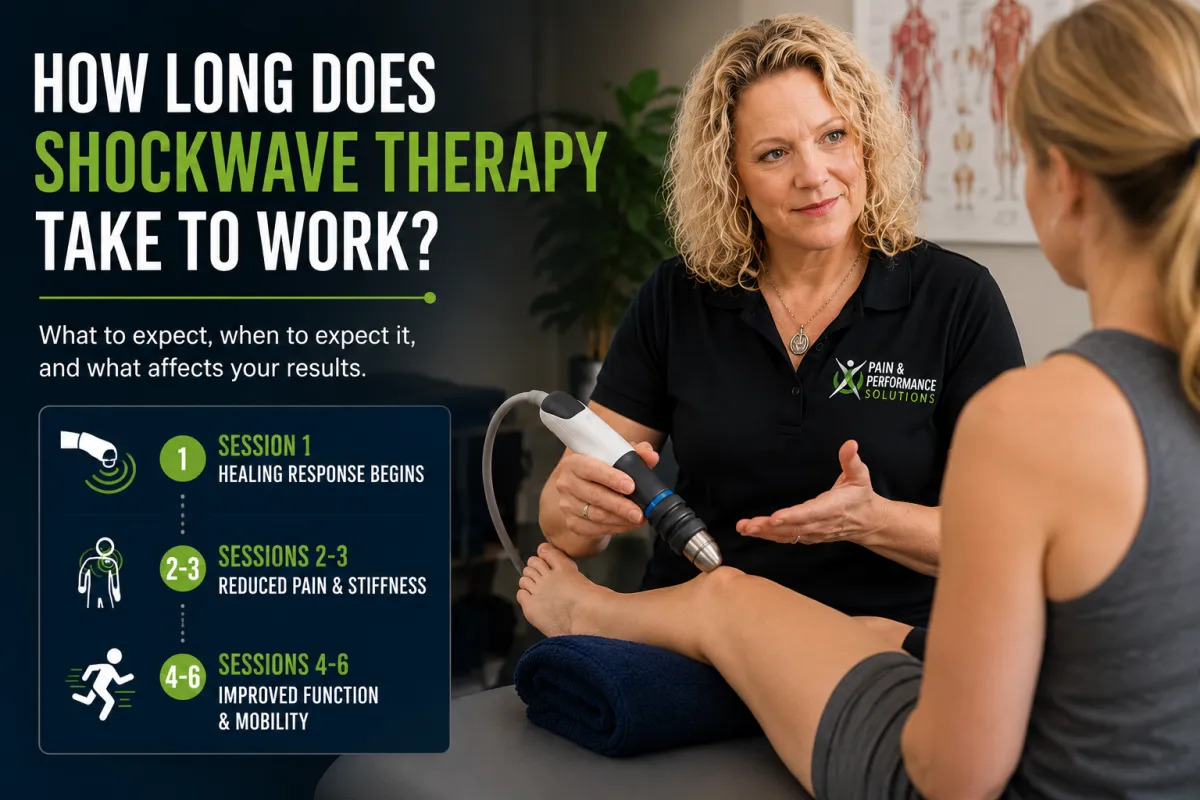
How Long Does Shockwave Therapy Take to Work?

How Long Does Shockwave Therapy Take to Work?
One of the most common questions we hear is:
"How long will it take before I feel better?"
The answer depends on several factors, including your condition, how long you've had it, and how your body responds to treatment.
Unlike pain medications or injections that often focus on symptom relief, Shockwave Therapy works by stimulating your body's natural healing process. Because healing takes time, results are typically progressive rather than immediate.
Understanding what to expect can help you feel more confident about your recovery journey.
How Shockwave Therapy Works
Shockwave Therapy uses high-energy acoustic waves that are delivered directly into injured tissue.
These waves help stimulate:
Blood flow
Cellular activity
Collagen production
Tissue regeneration
Natural healing mechanisms
The goal is to encourage tissues that have stalled in the healing process to become active again.
Because the treatment is stimulating healing rather than masking symptoms, improvement often occurs gradually.
When Do Most Patients Notice Results?
Many patients begin noticing changes within the first few treatments.
Common early improvements include:
Reduced pain
Improved mobility
Less morning stiffness
Improved tolerance to activity
Some individuals report improvement after the first session, while others may notice changes after several treatments.
Every person responds differently.
What Influences Recovery Time?
Several factors can impact how quickly results occur.
How Long You've Had the Condition
A problem that started a few weeks ago often responds differently than a condition that has existed for several years.
Chronic injuries generally require more time because tissues have been dysfunctional for a longer period.
The Type of Tissue Involved
Tendons, ligaments, and connective tissues naturally receive less blood supply than muscles.
As a result, healing tends to occur more slowly.
Activity Levels
Continuing activities that repeatedly irritate injured tissue may slow progress.
Following treatment recommendations can often improve outcomes.
Movement Patterns
In some cases, movement dysfunctions and compensation patterns contribute to ongoing stress on tissues.
This is one reason we evaluate the root cause of pain rather than focusing solely on symptoms.
Why Some Patients Feel Sore After Treatment
It is normal for some patients to experience temporary soreness following Shockwave Therapy.
This soreness is often a sign that the body's healing response has been stimulated.
Patients may experience:
Mild tenderness
Temporary sensitivity
Temporary discomfort
These effects are usually short-lived.
How Many Sessions Are Typically Needed?
Treatment recommendations vary based on the condition and severity of symptoms.
Some patients experience meaningful improvement within a few sessions.
Others with long-standing conditions may benefit from additional treatment.
Your personalized treatment plan will be based on your assessment findings and goals.
Why Combining Shockwave Therapy With Root-Cause Treatment Matters
Stimulating healing is important.
However, if the movement dysfunction that contributed to the injury remains unchanged, symptoms may eventually return.
At Pain & Performance Solutions, we often combine Shockwave Therapy with:
Movement assessment
Neurokinetic Therapy®
Corrective exercise
Movement retraining
This helps address both tissue healing and the factors that contributed to the problem in the first place.
What Results Can Patients Expect?
While individual outcomes vary, many patients seek Shockwave Therapy because they want:
Reduced pain
Improved mobility
Faster recovery
Better function
A non-surgical option
Our goal is to help patients move better, feel better, and return to the activities they enjoy.
Ready to Learn More?
If you've been dealing with chronic pain or a stubborn injury, Shockwave Therapy may be worth exploring.
Schedule your Free Discovery Visit with Pain & Performance Solutions today.
📍 Louisville, KY
📞 502-276-7222
Let's determine whether Shockwave Therapy is right for you.

Book Your Free
Discovery Session
No pressure. No obligation. Just clarity
In your 30-minute session, you’ll:
✔ Get clear on what’s actually causing your pain
✔ Understand your options
✔ Know if we’re the right fit for you
How It Works
1. Fill out a quick form
2. We’ll reach out to learn more about your situation
3. Schedule your free session

Call Us
For immediate assistance or to speak directly with one of our experts, feel free to give us a call.
(502) 276-7222

Visit Us
Drop by our shop to receive personalized service and discuss your needs face-to-face.
9900 Shelbyville Rd Suite 1A, Louisville KY 40223

E-mail Us
Have a question or need more information? Send us an email, and we'll get back to you promptly with the details you need.